About Malaria
Malaria is caused by Plasmodium parasites. The parasites are spread to people through the bites of infected female Anopheles mosquitoes, called "malaria vectors." There are 5 parasite species that cause malaria in humans, and 2 of these species – P. falciparum and P. vivax – pose the greatest threat.
- In 2017, P. falciparum accounted for 99.7% of estimated malaria cases in the WHO African Region, as well as in most cases in the WHO regions of South-East Asia (62.8%), the Eastern Mediterranean (69%) and the Western Pacific (71.9%).
- P. vivax is the predominant parasite in the WHO Region of the Americas, representing 74.1% of malaria cases.
Key facts
- Malaria is a life-threatening disease caused by parasites that are transmitted to people through the bites of infected female Anopheles mosquitoes. It is preventable and curable.
- In 2017, there were an estimated 219 million cases of malaria in 87 countries.
- The estimated number of malaria deaths stood at 435,000 in 2017.
- The WHO African Region carries a disproportionately high share of the global malaria burden. In 2017, the region was home to 92% of malaria cases and 93% of malaria deaths.
- Total funding for malaria control and elimination reached an estimated US$ 3.1 billion in 2017. Contributions from governments of endemic countries amounted to US$ 900 million, representing 28% of total funding.
Symptoms
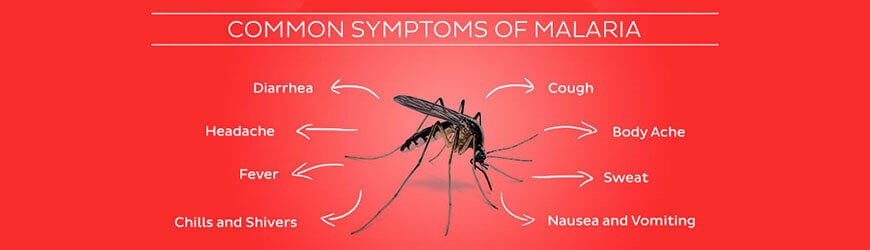
Malaria is an acute febrile illness. In a non-immune individual, symptoms usually appear 10–15 days after the infective mosquito bite. The first symptoms – fever, headache, and chills – may be mild and difficult to recognize as malaria. If not treated within 24 hours, P. falciparum malaria can progress to severe illness, often leading to death.
A pregnant woman infected with malaria may pass on the infection to her unborn child before or during delivery. This is termed ‘congenital malaria’.
The malaria parasite has an incubation period during which it remains in the host’s body. This is the period between being bitten by the mosquito and the appearance of symptoms. The duration can be anywhere from 10 days to 4 weeks after the infection. The incubation period for malaria differs based on the type of microbe, and is listed below:
- falciparum: 9 to 14 days
- vivax: 12 to 18 days but some strains may incubate for 8 to 10 months or even longer
- ovale:12 to 18 days
- malariae:: 18 to 40 days
- knowlesi:9 to 12 days
Signs & Symptoms of Malaria in Children
Babies affected with malaria may exhibit a sudden change in behavior like drowsiness, irritability, restlessness and lethargy. Many of them even complain of nausea and diarrhea. Some common symptoms of malaria in children are:
High fever: A high temperature is not necessarily a normal fever; it may indicate a serious infection or disease too. Besides other possible ailments, it may also be the initial symptom for malaria if it is accompanied by chills or shivering
Vomiting: Malaria can cause vomiting in children. The way the body reacts depends on the child’s sensitivity to the infection and its severity
Headaches: Headaches are common among children and adults alike, but if they are accompanied by other symptoms of malaria, they need to be taken seriously
Poor appetite: Poor appetite may sometimes be a result of malaria. However, before you jump to a conclusion, do look for the presence of other symptoms for malaria too
Stomach pain: Many children, when infected with malaria, complain of stomach pain and nausea. Since the infection begins in the liver, this is the area which is affected first
Irritability and drowsiness: Children tend to be cranky and moody when they are tired or ill, but if they are consistently irritated and drowsy, it may be an indication of a serious problem
Cold and cough: Cold and cough are quite common in children, but you should check for the presence of any other symptoms with it. If they are followed by fever or any of the other signs, it would be a good idea to consult your doctor
Sleeplessness: Malaria can cause different symptoms in different children. In some, it causes drowsiness while in some it can be a source of insomnia
Weakness: If your child is feeling weak, it is better to get him checked. A quick blood test is all it needs to confirm or eliminate malaria as the cause, and early detection ensures early recovery
Who is at risk?
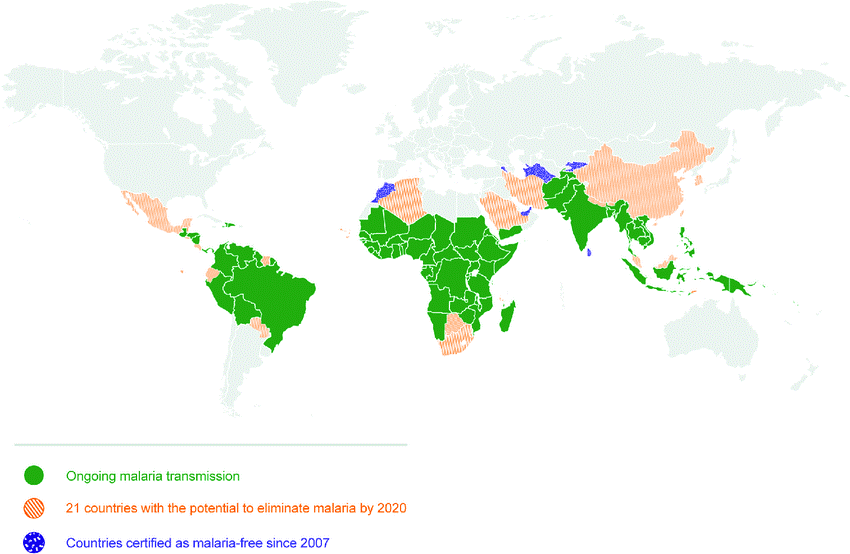
In 2017, nearly half of the world's population was at risk of malaria. Most malaria cases and deaths occur in sub-Saharan Africa. However, the WHO regions of South-East Asia, Eastern Mediterranean, Western Pacific, and the Americas are also at risk. In 2017, 87 countries and areas had ongoing malaria transmission.
Some population groups are at considerably higher risk of contracting malaria, and developing severe disease, than others. These include infants, children under 5 years of age, pregnant women and patients with HIV/AIDS, as well as non-immune migrants, mobile populations and travelers. National malaria control programs need to take special measures to protect these population groups from malaria infection, taking into consideration their specific circumstances.
Disease burden
According to the latest World malaria report, released in November 2018, there were 219 million cases of malaria in 2017, up from 217 million cases in 2016. The estimated number of malaria deaths stood at 435,000 in 2017, a similar number to the previous year.
The WHO African Region continues to carry a disproportionately high share of the global malaria burden. In 2017, the region was home to 92% of malaria cases and 93% of malaria deaths.
In 2017, 5 countries accounted for nearly half of all malaria cases worldwide: Nigeria (25%), the Democratic Republic of the Congo (11%), Mozambique (5%), India (4%) and Uganda (4%).
Children under 5 years of age are the most vulnerable group affected by malaria; in 2017, they accounted for 61% (266,000) of all malaria deaths worldwide.
Access the report of WHO here. World malaria report 2018
|
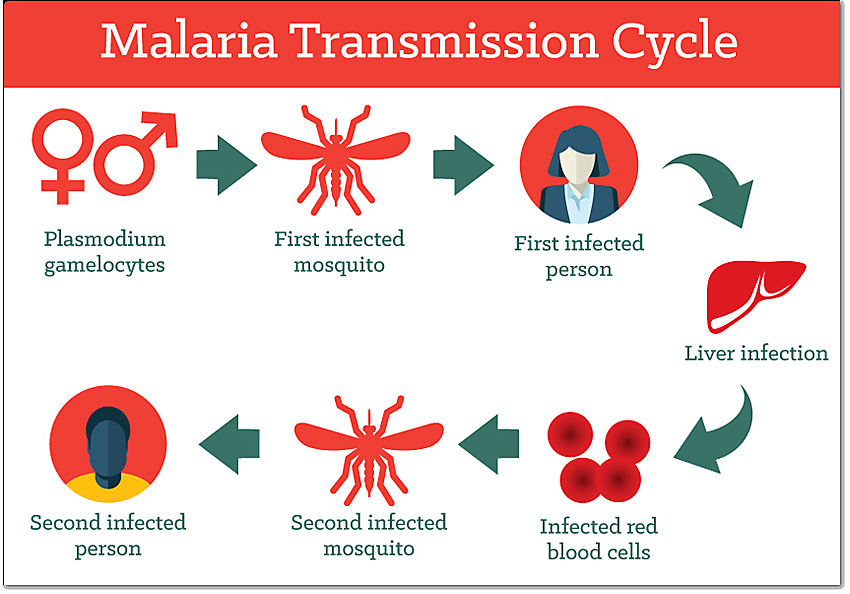
Transmission In most cases, malaria is transmitted through the bites of female Anopheles mosquitoes. There are more than 400 different species of Anopheles mosquito; around 30 are malaria vectors of major importance. All the important vector species bite between dusk and dawn. The intensity of transmission depends on factors related to the parasite, the vector, the human host, and the environment. Anopheles mosquitoes lay their eggs in water, which hatch into larvae, eventually emerging as adult mosquitoes. The female mosquitoes seek a blood meal to nurture their eggs. Each species of Anopheles mosquito has its own preferred aquatic habitat; for example, some prefer small, shallow collections of fresh water, such as puddles and hoof prints, which are abundant during the rainy season in tropical countries. Transmission is more intense in places where the mosquito lifespan is longer (so that the parasite has time to complete its development inside the mosquito) and where it prefers to bite humans rather than other animals. The long lifespan and strong human-biting habit of the African vector species is the main reason why approximately 90% of the world's malaria cases are in Africa. Transmission also depends on climatic conditions that may affect the number and survival of mosquitoes, such as rainfall patterns, temperature and humidity. In many places, transmission is seasonal, with the peak during and just after the rainy season. Malaria epidemics can occur when climate and other conditions suddenly favour transmission in areas where people have little or no immunity to malaria. They can also occur when people with low immunity move into areas with intense malaria transmission, for instance to find work, or as refugees. Human immunity is another important factor, especially among adults in areas of moderate or intense transmission conditions. Partial immunity is developed over years of exposure, and while it never provides complete protection, it does reduce the risk that malaria infection will cause severe disease. For this reason, most malaria deaths in Africa occur in young children, whereas in areas with less transmission and low immunity, all age groups are at risk. |
Prevention
Vector control is the main way to prevent and reduce malaria transmission. If coverage of vector control interventions within a specific area is high enough, then a measure of protection will be conferred across the community.
WHO recommends protection for all people at risk of malaria with effective malaria vector control. Two forms of vector control – insecticide-treated mosquito nets and indoor residual spraying – are effective in a wide range of circumstances.
- Insecticide-treated mosquito nets
- Indoor spraying with residual insecticides
- Antimalarial drugs
- Insecticide resistance
Sleeping under an insecticide-treated net (ITN) can reduce contact between mosquitoes and humans by providing both a physical barrier and an insecticidal effect. Population-wide protection can result from the killing of mosquitoes on a large scale where there is high access and usage of such nets within a community.
In 2017, about half of all people at risk of malaria in Africa were protected by an insecticide-treated net, compared to 29% in 2010. However, ITN coverage increased only marginally in the period 2015 to 2017.
Indoor residual spraying (IRS) with insecticides is another powerful way to rapidly reduce malaria transmission. It involves spraying the inside of housing structures with an insecticide, typically once or twice per year. To confer significant community protection, IRS should be implemented at a high level of coverage.
Globally, IRS protection declined from a peak of 5% in 2010 to 3% in 2017, with decreases seen across all WHO regions. The declines in IRS coverage are occurring as countries switch from pyrethroid insecticides to more expensive alternatives to mitigate mosquito resistance to pyrethroids.
Antimalarial medicines can also be used to prevent malaria. For travellers, malaria can be prevented through chemoprophylaxis, which suppresses the blood stage of malaria infections, thereby preventing malaria disease. For pregnant women living in moderate-to-high transmission areas, WHO recommends intermittent preventive treatment with sulfadoxine-pyrimethamine, at each scheduled antenatal visit after the first trimester. Similarly, for infants living in high-transmission areas of Africa, 3 doses of intermittent preventive treatment with sulfadoxine-pyrimethamine are recommended, delivered alongside routine vaccinations.
Since 2012, WHO has recommended seasonal malaria chemoprevention as an additional malaria prevention strategy for areas of the Sahel sub-region of Africa. The strategy involves the administration of monthly courses of amodiaquine plus sulfadoxine-pyrimethamine to all children under 5 years of age during the high transmission season.
Since 2000, progress in malaria control has resulted primarily from expanded access to vector control interventions, particularly in sub-Saharan Africa. However, these gains are threatened by emerging resistance to insecticides among Anopheles mosquitoes. According to the latest World malaria report, 68 countries reported mosquito resistance to at least 1 of the 5 commonly used insecticide classes in the period 2010-2017; among these countries, 57 reported resistance to 2 or more insecticide classes.
Stopping Mosquitoes: The Best Malaria Prevention
Mosquitoes are public enemy number one when it comes to malaria. When experts are asked “How can malaria be prevented?” most agree that there is one major solution: reduce the risk of mosquito bites. Unfortunately, mosquitoes are everywhere.
If you want to reduce your risk of malaria and your risk of mosquito bites, here are some ways you can reduce the number of mosquitoes you encounter at home: |
|
 |
Remove standing water near your home. Rain barrels, ponds, puddles, bogs, and any still body of water can be mosquito breeding grounds. Eliminating these breeding grounds leads to fewer mosquitoes and fewer mosquito bites. |
 |
Trim appropriately. Shaded areas with damp soil can also attract mosquitos, as can long grasses. Keep lawns and yards trimmed and cut to give mosquitos fewer places to hide. Trim trees and hedges to eliminate mosquito hiding spots. |
 |
Use proper control methods. Use mosquito zappers, insect repellant, and citronella candles when you’re going to be outside. |
 |
Add smoke. If you’ll be sitting outside, consider using a fire pit or campfire to create smoke. Most insects do not like smoke. |
 |
Use mosquito traps like the Mosquito Magnet® traps. Traps reduce the mosquito population near your home. Unlike pesticides, traps are non-toxic and can provide a long-term solution to mosquito problems. |
In addition to carrying the risk of malaria, mosquito swarms are annoying and carry the risk of other diseases as well. Enjoy your summers and protect your family today by controlling mosquito populations near your home.
Mosquito Magnet® traps are one of the few long-term solutions that reduce mosquito populations near your home. These traps turn propane into carbon dioxide (CO2). The traps mimic the moisture and heat of a person, attracting female mosquitoes. Once the mosquitoes approach the trap, they are sucked in through a vacuum and into a net. Without so many female mosquitos around to reproduce, the overall population of mosquitos drops.
Treatment of Malaria
It’s important to get proper treatment for malaria immediately. Left untreated, the disease can get worse. If complications happen, malaria can prove fatal. Young children, the elderly, and those affected by serious disease face a higher risk of being unable to fight off the disease.
Malaria can attack red blood cells and can lead to very high fevers, which can be hard to fight off. Pregnant women can also be at risk. They may not be able to fight off the symptoms as effectively, and the disease can cause low birth weight for the baby and other possible complications.
If you are diagnosed with malaria, your doctor will likely prescribe some form of medication. You may be given one of the following medications:
|
|
The exact treatment you get will depend on a few things, including your medical history, your symptoms, and the type of malaria parasite you have. If you are pregnant, you may not be able to take certain anti-malarial drugs.
One big problem with treatment is that some malaria parasites have become drug-resistant, so you might have to change medication if one treatment is not working or your symptoms get worse. Your doctor will work with you to find a medication that helps.
Surveillance
|
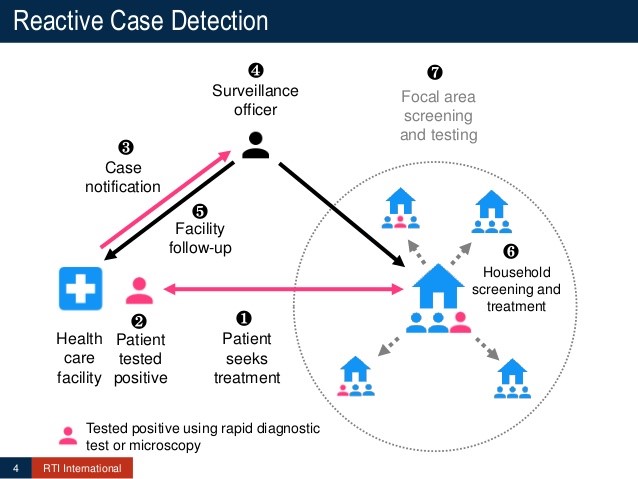
Surveillance entails tracking of the disease and programmatic responses and acting based on the data received. Currently, many countries with a high burden of malaria have weak surveillance systems and are not able to assess disease distribution and trends, making it difficult to optimize responses and respond to outbreaks. Effective surveillance is required at all points on the path to malaria elimination. Stronger malaria surveillance systems are urgently needed to enable a timely and effective malaria response in endemic regions, to prevent outbreaks and resurgences, to track progress, and to hold governments and the global malaria community accountable. In March 2018, WHO released a reference manual on malaria surveillance, monitoring and evaluation. The manual provides information on global surveillance standards and guides countries in their efforts to strengthen surveillance systems. |
Elimination
Malaria elimination is defined as the interruption of local transmission of a specified malaria parasite species in a defined geographical area as a result of deliberate activities. Continued measures are required to prevent re-establishment of transmission.
Malaria eradication is defined as the permanent reduction to zero of the worldwide incidence of malaria infection caused by human malaria parasites as a result of deliberate activities. Interventions are no longer required once eradication has been achieved.
Countries that have achieved at least 3 consecutive years of 0 local cases of malaria are eligible to apply for the WHO certification of malaria elimination. In recent years, 9 countries have been certified by the WHO Director-General as having eliminated malaria: United Arab Emirates (2007), Morocco (2010), Turkmenistan (2010), Armenia (2011), Maldives (2015), Sri Lanka (2016), Kyrgyzstan (2016), Paraguay (2018) and Uzbekistan (2018). The WHO Framework for Malaria Elimination (2017) provides a detailed set of tools and strategies for achieving and maintaining elimination.
Vaccines against malaria
RTS,S/AS01 (RTS,S) is the first and, to date, the only vaccine to show partial protection against malaria in young children. It acts against P. falciparum, the most deadly malaria parasite globally and the most prevalent in Africa. Among children who received 4 doses in large-scale clinical trials, the vaccine prevented approximately 4 in 10 cases of malaria over a 4-year period.
In view of its public health potential, WHO’s top advisory bodies for malaria and immunization have jointly recommended phased introduction of the vaccine in selected areas of sub-Saharan Africa. The vaccine will be introduced in 3 pilot countries – Ghana, Kenya and Malawi – in 2019.
 Do's Do's |
|---|
|
 Don'ts Don'ts |
|---|
|